
"Stand Here" - Thoughts Behind the Song
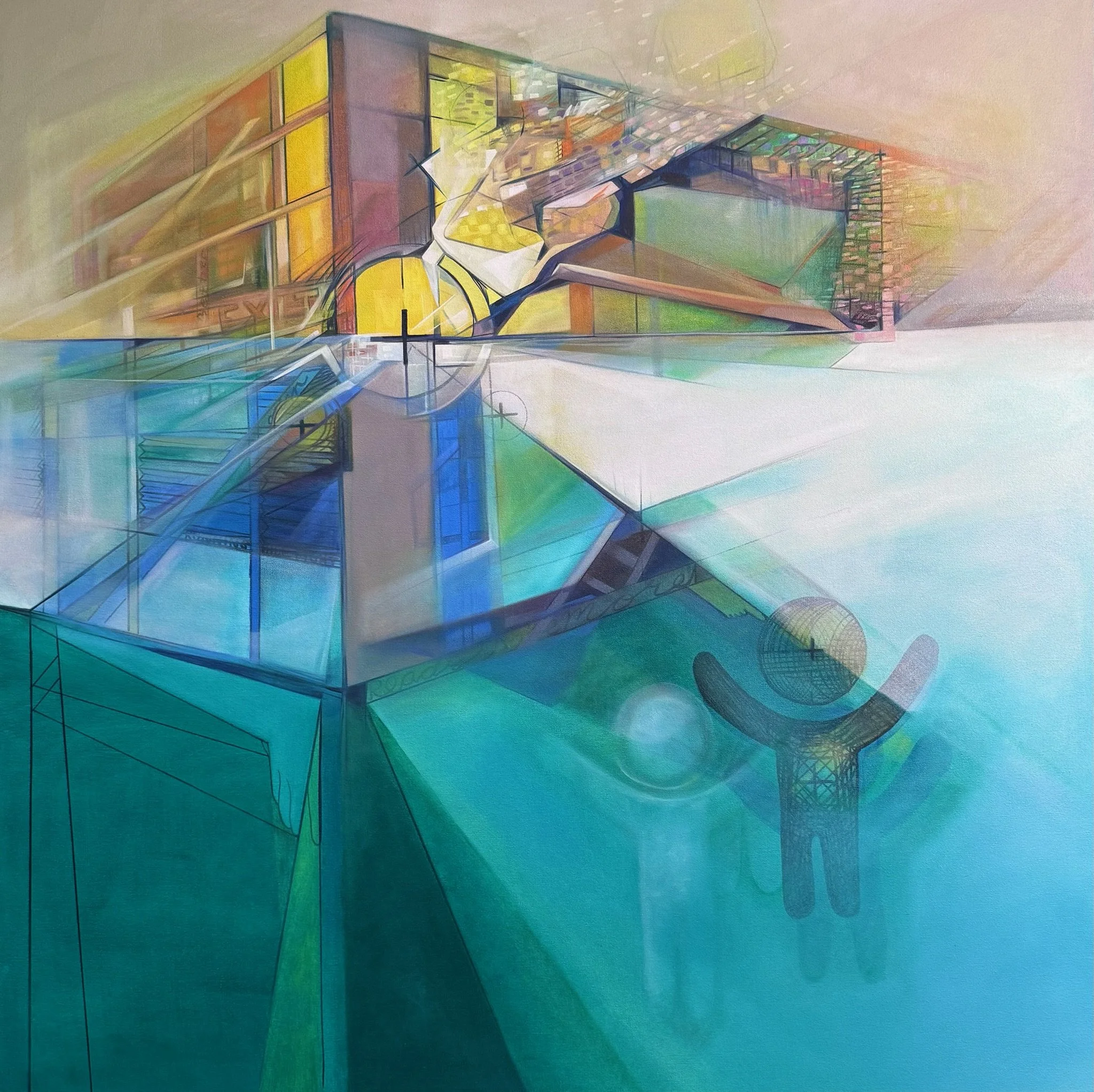
Stand Here - 40×40 original paining
On July 4th, 2024, I heard the tragic story of Jayda Woods-Johnson, a local 13-year-old girl who was shot and killed at the food court at Alderwood Mall. The 16-year-old boy who fired the shot had an altercation with a group of boys. He aimed at one of them, missed, and struck Jayda instead, someone simply in the wrong place at the wrong time.
This story devastated me. I had dropped my own kids off at that exact spot many times to meet their friends. I kept thinking about the parents. What were they experiencing? How do you survive a tragedy like that?
As I processed this, I felt compelled to create.
I thought of a local artist I admire, Holly Ballard Martz, who tackles subjects like domestic abuse, abortion, politics, and gun violence. Her piece “Constellation of Transgressions” (Thoughts and Prayers), the phrase spelled out in spent bullet primers, demonstrates how art can articulate a powerful perspective.
I also remembered the impact of Pearl Jam’s “Jeremy.” I decided to relearn it for a performance on July 13th, and as I reacquainted myself with it, I began forming the idea for my own song, “Stand Here.” I was struck by how “Jeremy” is sung from the bully’s point of view—an emotionally complicated and unsettling perspective. It made me wonder:
How could I offer a new point of view in order to process my own emotions about being a mother in a world saturated with gun violence?
The AS IF! Moment
I began with the question of what we tell our kids to do to be safe. I researched school protocols: lockdowns, lockouts, shelter-in-place procedures, trauma-informed training, and other institutional vocabulary. I filled my journal with these phrases, assembling the litany of instructions we hand to children.
The basic order is always the same:
Run. If that doesn’t work, hide. If that doesn’t work, fight. Fight last.
Reading these guidelines made me react with a kind of incredulous anger. Oh sure, just follow all of this and you’ll be fine. AS IF.
Jayda wasn’t safe. So many kids aren’t safe.
That AS IF! moment flipped the perspective of the song into something sharper—sarcastic, almost from the point of view of an “adult” who believes everything we’re doing is working. By adopting that persona, I could sing out the instructions we give our children and let listeners feel the absurdity and violence embedded within them.
Process that, mfers. Right back at you.
That night, after all this research and emotion, I had a dream about the song. I woke up and wrote the melody and lyrics in one sweep. I barely edited them later. It truly felt as though the song had written itself in my sleep, I just had to transcribe it.
Side note: One of my proudest songwriting moments was accenting the opening consonants of Check, Change, Charge, Take so they sound like gunshots.
One idea that kept surfacing as I wrote from this persona is how much we expect kids to endure. We expect them to be “more” be trauma-informed, vigilant, and adaptable to the reality of gun violence. The question that echoed in my heart was:
Why? Why don’t they have the right to feel safe in their own communities?
If culture is shaped by values, what does it say about ours that this is the norm?
How can we orient ourselves toward protecting innocence and safety?
- maëry
Curious about the painting? I wrote about it here THOUGHTS BEHIND THE PAINTING